Showing posts with label Book Interview. Show all posts

Friday, December 23, 2016

Journey to Give a Humble Mumbaiya Vadapav- A National Identity!

‘Why Vadapav can’t stand tall among Burger and Pizzas of the World?’, this was the question that rose in the mind of a finance professional- Venkatesh Srinivas Iyer. This awakened his foodies soul, the passion fired in him to take the uncharted path of making a simple, humble street food of Mumbai widely popular through his QSR chains- 'Goli Vadapav'. Both, Venkatesh Srinivas Iyer and his co-founder- Shivadas Menon through their venture succeeded in making vadapav- a national brand.

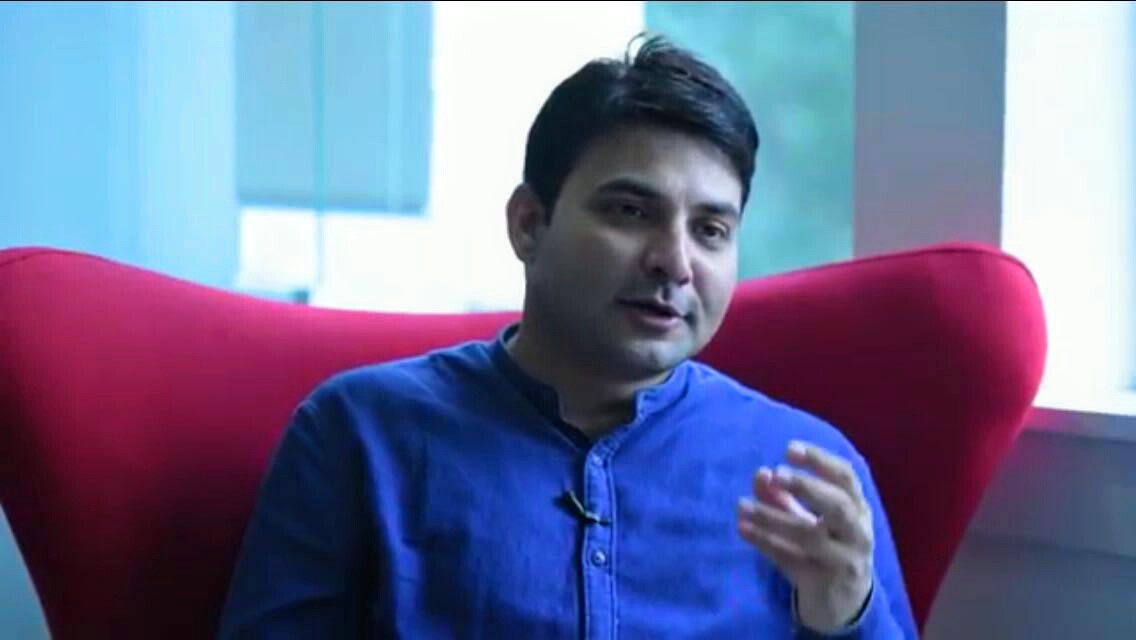
Venkatesh Iyer
Soon, Venkatesh Iyer felt the need of penning down their adventurous entrepreneurial journey and thus was born a book- 'My Journey with Vadapav'. According to Venkatesh Iyer, “This book is not only a handbook for entrepreneurs in the food segment but an attempt to inspire entrepreneurs across the board. One could be planning to launch a tech or a B2B or a consumer facing business. The key is to not give up ever and take small failures in your stride because once you put your mind into anything; it will not be able to elude you for long. Your will power and ability to find a way out of any problem will make your business a success in due course and that’s what we set out to achieve and I hope this book will enable many more entrepreneurs in our country.”

1. First of all, there are myriad Indian finger food you could have plunged into. What made you choose Vadapav among all of them?

Venkatesh Iyer- Vadapav is a brand in itself but has always been a street food made in unhygienic conditions. The product has a major pull simply because its ingredients have a national appeal – besan, bread, potatoes and chutneys. On a hot afternoon, after I finished a meeting and reached CST Terminus in Mumbai via a local. I was starving and decided to grab a burger at a newly opened McDonald outside the station. While crossing the road towards the restaurant, I saw a 40 ft tall hoarding of the McDonald burger and under the hoarding, a vadapav vendor was dishing out hot and freshly made vadapavs to 20 odd people. It struck me how similar burger and vadapav are. It was a eureka moment for me and I said to myself, ‘Why Vadapav can’t stand tall among Burger and Pizzas of the World?’ It was at that moment, my co-founder Shivadas Menon and I decided to take a plunge and start a QSR chain selling hygienic vadapavs at competitive prices. 

2. You and your partner were both into finance sector. What inspired both of you to plunge into food sector?

Venkatesh Iyer- In our previous avatar as corporate finance professionals, we helped many businesses raise funds. While my co-founder is a hardcore number guy, I’m more of a storyteller. So, I would sell the story of a brand and he would strengthen the case by presenting the facts and numbers to help banks and institutions make investment decisions. While we enjoyed our stint but both of us wanted to start our own venture in food space. Because we believed it is a largely untapped segment and dominated mostly by unorganized sector. When we zeroed in on the product idea, we dedicated ourselves full time to set up Goli Vadapav. 

3. Food sector is a path of challenges as Indians are loyal to their taste buds. What sorts of challenges did you face?

Venkatesh Iyer- We understand the Indian taste palate. We knew that in order to succeed, we couldn’t go away from the Indian taste and that’s why we chose to open a pan India chain, which would sell vadapavs in many variants. However, our set of challenges were different. When we started, we had a central kitchen from where the product was prepared by number of chefs and dispatched to the neighbouring stores. In no time, we were flooded with calls and franchise inquiries but the challenge was expansion. If we continue to service from a manually run central kitchen then capex would increase with number of stores going up, logistics will be a challenge too. Thus, we needed different partners on board. We also wanted to put in a place a uniform process of preparing the vadapavs so that taste is standardized and pilferage and wastage can be removed from the system. We reached out to a large MNC which was already doing back end product preparation work for an American QSR chain in India. After a few round of meetings and presentations, our proposal was accepted and the MNC came on board to prepare Goli Vadapav in their factory on a separate belt. Next, we signed on a logistics partner to ensure timely delivery to our stores. This helped us expanding fast at pan India level. 

4. What is the reason behind keeping the brand name 'Goli'? Are you planning to establish this brand in International arena?

Venkatesh Iyer- Vadapav is a Mumbai thing and word Goli is a slang word. If you will overhear a friendly banter in this city, you are most likely to hear ‘Kya Goli de raha hai yaar’. Since, we set out to create a Mumbaiya brand for the country, it was only natural that our product, brand, store aesthetics and everything else should represent Mumbai and its spirit. 

5. Which Vadapav from your menu is an all time favourite and sells the most?

Venkatesh Iyer- We sell close to 10 different variants of vadapav. Our all time favourite is classic Vadapav while others like Masala Vadapav and Spinach Corn Vadapav are famous in different regions as per taste palate of the region. 

6. Dominos and McDonals are trying to Indianize their menu that suits Indian taste buds. What is your take on it? Does 'Goli Vadapav' sees them as potential competitors?

Venkatesh Iyer- Every QSR brand is a competition. India is a price sensitive market. However, over the last decade, Goli has carved its niche as an ethnic fast food chain selling authentic spicy Indian vadapav across the country.

Friday, October 7, 2016

Virat Kohli- The Undisputed Monarch of Cricket!

“Dad, throw the ball”, a three-years old Virat, swinging his bat, shouted out loud to his father. The echo of his steadfast voice made clear to his father that the game of cricket will shape Virat's destiny. From that day onwards, the only dream of little Virat was to play cricket for the Indian team, and his fervour for cricket got nurtured by his father to the extent that cricket became the only goal of his life. And, that's how the legend was born!

Virat Kohli's undying passion for cricket caught the attention of the well-acclaimed sports journalist- Vijay Lokapally. The ruling sports stars have always inspired Vijay Lokapally to pen down their adventurous streak in the pages of his book. There exists no person, who is a sports lover and have not read a single article by Vijay Lokapally. He is working with 'The Hindu' over three decades and is a well-known personality not only in India but in abroad as well.

'Driven- The Virat Kohli Story' written by Vijay Lokapally, is the book of Virat Kohli, communicating to the world his journey from Virat Kohli to 'The Virat Kohli'! In the excerpt of this book, he has bewitchingly described Virat Kohli's success as - “What makes Virat Kohli the undisputed monarch of the cricket world today is not his iconic status in the sports hierarchy but that the highest praise comes from the opposition camp and past greats.” The sole line from excerpt is suffice to leave its readers with goosebumps.

1. This is your second book on the biography of a cricketer. The first one was on Virender Sehwag. Why does cricket as a sport fascinate you?

Vijay Lokapally: Not just me. Cricket is a rage with a majority of the sports loving fans in India. It is a team game where individual performances also get a huge share of attention and accolades. I like the contest between the bat and ball because there is plenty of intrigue involved.

2. What is the most vital change you witnessed in yourself when writing the books?

Vijay Lokapally: I discovered the hard work that an icon puts in to reach the exalted stage. I also realized that cricket is not the end of the world. There is cricket. And there is life. 

3. What do you think is the most interesting thing about Virat Kohli that made you write about him?

Author: Vijay Lokapally
Vijay Lokapally: His passion. That is what drives him to scale new heights. The book has an apt title. It really portrays the true Virat.

4. How has your journey been from the acknowledgement of the book to the excerpt on the back cover? What was the most memorable thing you experienced while writing this book?

Vijay Lokapally: To tell you the truth, it was an extension of the journalistic work. I have tried my best to present Virat and his cricket honestly. The excerpt on the back cover and quotes from some of the greats of the game, not to forget the foreword, is the reward I have earned from my association with this great game.

5. Most sports are underrated in comparison to cricket in India, even though there are great sports persons like PV Sindhu, Leander Paes, Dipa Karmakar, Pullela Gopichand and so on who have set numerous records. If given a chance, which sports person other than a cricketer would you like to write about?

Vijay Lokapally: Dipa Karmakar. Because without much facilities she, along with her coach Bishweshwar Nandi, has done something unbelievable in a highly competitive field.

6. One word that you would like to use to metaphorise 'Cheeku' of India?

Vijay Lokapally: A brave warrior.

7. You have been involved in the sports and broadly known for your articles on cricket for over three decades. What piece of advice would you like to share with the youth of our nation who wish to enter the world of cricket?

Vijay Lokapally: The game is changing and has become more competitive. One has to rise to newer challenges while sticking to the basics of hard work and dedication.


Interview taken by Nidhi Bohra. Nidhi Bohra is a Content Writer working with Infibeam. She is fun-loving, pet lover and a massive Bibliophile. Love Stories fascinate her and Horrors excite her. She is a firm believer of “Everything-happens-for-a-reason” notion and manages to find humour in every situation.

Tuesday, September 27, 2016

Rekha- ' An Eternal Fighter': Yasser Usman

Rekha, the Bollywood Diva of 1970s and 1980s intrigued many when she fearlessly made public appearances with her forehead smeared with sindoor, even a decade before her one official marriage! This stunning and ageless diva who was once termed as bold and loudmouthed, secluded herself from the starry world of Bollywood after her husband- Mukesh Aggarwal's death in 1991.

Yasser Usman, a television journalist and the recipient of the prestigious Ramnath Goenka Award for Excellence in Journalism in the Film & Television (Broadcast) category brought out the real face of Rekha lost in the pages of film magazines of those times through this biography- 'Rekha: The Untold Story'. Yasser Usman has also penned down the biography on Rajesh Khanna.

When asked, why these actors fascinated him, he said, “The grand contradiction or dichotomy of being the most loved and yet being the loneliest intrigued me in both the stories (Rajesh Khanna and Rekha). These are the superstars adored by millions, yet you’ll be shocked to discover the kind of loneliness and isolation they have to go through. This is an emotional story where she appears very human.”

1. In many of the interviews, you claimed that you were not a huge fan of Rekha. Hence, what motivated you to pen down the biography on the reclusive Bollywood diva?

Yasser Usman: Rekha for my generation is a ‘diva’ and any discussion about her is always accompanied by her association with Amitabh Bachchan.  This narrative continues even during the award functions when the camera cuts to Rekha at the mention of Amitabh Bachchan and vice versa. We conveniently forget the real story of Rekha. The story of her childhood, her exploitation in the Hindi film industry, body-shaming and her tragic marriage to a Delhi businessman who committed suicide. It was a story to be told. Yes, I am not a fan of Rekha and Rajesh Khanna (my previous book was about him). This is a rule I try to follow and it really helps me to keep a balanced perspective. I feel I can write more objectively. 

2. According to you, which is the best part of Rekha's biography that will leave readers completely stunned and emotionally moved at the same time?

Yasser Usman: The chapters about her marriage are fascinating and shocking. Her sudden marriage to Mukesh Agrawal. Rekha became a ‘Dilli ki Bahu’ and wanted to lead a peaceful family life. But it was not to be. The husband committed suicide using her dupatta and then a witch hunt started blaming Rekha for his death. These chapters document the most shocking and tragic events of her life.

Author: Yasser Usman
3. Rekha denied the interview. The biography is written based on the previous interviews of Rekha. Describe your experience of researching her previous interviews and then giving it a story tone.

Yasser Usman: The interviews used are from the time when Rekha used to give bold interviews and openly talked about all the events of her life including her relationships and childhood. There are some rare interviews in the book where she mentions her relationship with Amitabh Bachchan in detail.She even talks about her mother and her struggle.  Now she is herself talking about the most personal aspects of her life. It is actually Rekha’s voice in the book taking the story forward and giving it a novelistic feel. 

4. From those who agreed for the interviews, which interview was the most interesting one that helped you to portray Rekha in a more realistic manner?

Yasser Usman: I think the interviews of Gulzar and Muzaffar Ali (director of Umrao Jaan) gave superb insights. The anecdotes about Rekha the actress and a human being as narrated by these filmmakers were full of warmth. Muzaffar Ali fondly narrated her transformation from a Tamil speaking Chennai girl to Urdu speaking Lakhnavi courtesan Umrao Jaan. Gulzar and Shyam Benagal also told interesting stories that will surprise you.  

5. As an author, did you undergo any kind of transformation as an individual after the completion of this biography? If yes, please share with our readers, what sort of transformation is it?

Yasser Usman: When you write a biography, you are constantly thinking about your subject during the course of research and writing (more than one year in this case). You try to dissect every important event of her life. It affects you at a certain level. The book changed the complete narrative about Rekha in my mind. I’ve started respecting her more. She has gone through hell and is an eternal survivor. Very inspiring. 

6. How is 'Eurekha' – a biography on Rekha by Mohan Deep different from yours?

Yasser Usman: I couldn’t get a copy of his  book. It’s out of print.  I just have the photocopies of a few chapters. What I understood from those few chapters was that the focus was only the love life and affairs of Rekha. But his research was very good. In fact, he allowed me to use an interview from his research. I am thankful for his help. My book focuses on the major events- personal and professional. So I talk about her important films as well as the events in her personal life. The childhood, entry into films, her disturbed relationship with her father, Ghar, Umrao Jaan, Khoobsurat and of course Amitabh Bachchan.

Interview taken by Himali Doshi. Himali Doshi is a Content Writer working with Infibeam. Writer by profession, she adores foreign languages, cuisines and books on mythologies. She is a feminist but an unbiased one! 

Thursday, March 12, 2015

'Modi is a Complex Person'

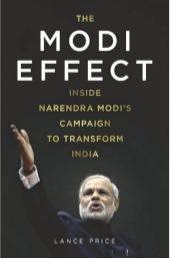
Esteemed Journalist & Author, Lance Price Talks about his new book The Modi Effect: Inside Narendra Modi's Campaign to Transform India 

Lance Price Author
Lance Price
Lance Price is an author, political commentator, former BBC correspondent and media advisor in 10 Downing Street. An Oxford alumni, Price has worked for BBC for nearly 2 decades, and is an avid traveller. He has worked in North Ireland, was a national radio and TV reporter, Defence Correspondent, and finally a Political Correspondent at Westminster.

In 2011, Price left journalism to join the press office at 10 Downing Street as a special adviser for Alastair Campbell. In 2000, he became the Labour Party’s Director of Communications and helped plan -and then run the 2001 General Election campaign.

Since 2001, Price has been a freelance writer, broadcaster and commentator. He also lectures in politics, journalism, and at times does media training as well. He has authored three book so far: The Spin Doctor's Diary, Time and Fate, and Where Power Lies.

His fourth book, The Modi Effect: Inside Narendra Modi's Campaign to Transform India is going to release on the 12th of this month. Infibeam got a chance to have a conversation with the eminent journalist about the book that's been creating ripples on the Indian Political scene. Here is what he had to say: 

Que: Your book The Modi Effect: Inside Narendra Modi's Campaign to Transform India claims to give a never seen before view of Modi's Lok Sabha election campaign from the back-room. Can you say that you have covered every aspect of the campaign?

Lance Price: I was very fortunate to be able to interview Prime Minister Narendra Modi four times and get a great many new thoughts from him about how me managed the campaign and the tactics he used. I also spoke to people at every level of the campaign, from high-level advertising executives to junior foot soldiers who worked at the booth level. I have done my best to cover all aspects of the campaign. Some of it was very modern and high-tech, including the 3D hologram rallies. And The Modi Effect tells the story of what a huge undertaking these were and how sometimes it appeared that it might all go wrong, but by hard work and good fortune it worked! I hope there is plenty of detail for readers who would love to know more about exactly how the election was planned and executed. But it is not just for politics addicts. I have tried to make the book interesting for all readers who would like to re-live some of the great moments of the election and find out how it looked from the inside.

The Modi Effect: Inside Narendra Modi's Campaign to Transform India
Que: Being an outsider, what inspired you to take up PM Narendra Modi's election campaign as the subject of your book? Do you think you have done justice to the Indian point-of-view?

Lance Price: It is true that I am an outsider but I hope that gives me a unique perspective. I love elections and have seen many in different parts of the world, although nothing to compare with the Modi campaign. I wanted to see how he did it but also to see what lessons people in the west could learn from an Indian election. There will be a campaign in my country, the UK, very soon and in America next year. I think that the Modi campaign was a trend-setter and that many people outside India will be fascinated by the story also. Of course all the people who gave their time to be interviewed were Indian and the book is full of their stories, so I very much hope it does do justice to the campaign through Indian eyes.

Que: Tell us about the research you did for the book. How and where did you begin, what made you decide that you had enough material for the book?

Lance Price: When you are researching something like this, there is no such thing as enough material. I would have been happy to meet more and more and people and hear their stories, because they are all so fascinating. But at some point you have to say that you now have enough to tell the story properly and fairly. And because it is about last year’s election we wanted to make sure the book was available quite quickly while the memories of the election are still so fresh in everybody’s minds. I began with Mr Modi himself, of course, and he had many suggestions for how to tell the story of the triumph of Indian democracy. And I also spoke to academic experts and journalists in India to get a rounded perspective.

Que: Share something interesting that happened during your research.

Lance Price: The minister Mr. Piyush Goyal was very kind to invite me to his house and offer me dinner with his wife. They were both so excited by the campaign and full of good information. At one point during the meal Mr. Goyal told me about a TV advert he had planned to show after Mr. Modi was denied permission for a rally in Varanasi. The first version would have been very controversial because Mr Goyal and his team were quite angry when they made it. In the end they decided to use a more upbeat advert and so nobody had seen the original. But Mr. Goyal still had it on his phone so he pulled out his mobile and shared it with me. You can read all about it and what I thought of it in the book.

Que: How do you think Modi's victory in the elections has affected the world?

Lance Price: Narendra Modi’s election has already had a huge impact. He has already travelled to many world capitals and taken him with him the message that India is changing. His victory has gripped the attention of people all over the globe which is another reason I wrote The Modi Effect. I think if people want to understand the new direction India is taking then first they have to try to understand Mr Modi. And he is a complex and fascinating person. India’s size and economic potential means that whatever happens in India will have a big impact internationally.

Que: Do you think Modi's victory is a reflection of the shift in people's mindset with regards to the minorities?

Lance Price: One of the most interesting things about the Narendra Modi campaign is that it challenged the mind-set of people about all sorts of things, not just the minorities. He said to all Indians that it was time to rethink how politics is done in your country. I call it in the book ‘recasting India’ with a deliberate pun on caste and how people decided to cast their votes. We will have to see how permanent those changes are. Mr Modi preferred not to address his campaign at the minorities but to talk about all Indians and the needs they all have, whether it is jobs or a roof over their heads or a government that is less corrupt. What I found very significant was the stress he placed on women and young people in the election. And he has repeated those priorities since he became prime minister.

Que: Do you think that Modi's campaign and the subsequent victory was a hype created by the Indian media?

Lance Price: No, the election campaign and Modi's victory were very real, not hyped. There was definitely lots of excitement in the media and one of Modi’s successes was to get the media very worked up about him and what he was saying. He managed to dominate the media in many quite clever ways and my book explains how this was done. If Congress and the other parties think they were out-shone in the media then they should study what the BJP did and look again at their own strategies.

Que: You are the only author who has secured interviews with Modi and his core team. How was the experience?

Lance Price: I was very fortunate to be the only author to be granted access to Narendra Modi and several of his ministers and key campaign workers. It was a great privilege and I am very grateful to him for his time and to everybody else also. He is a very busy man but he was always very courteous with me and did not appear to be in any hurry at all. So we were able to discuss many things at some length. It was also important that he said I could write the story in my words without any strings attached in return for the access. Being with him in the room for over an hour at a time was fascinating. He is very engaged in the conversation and he loves to talk about the details of the campaign and how it felt for him. His stamina and energy are like those of a much younger man!

Wednesday, February 18, 2015

An Interview with Sudeep Nagarkar, The Modern Romance Writer

An engineer by education and a writer by profession, Sudeep Nagarkar is an award winning, best selling romance author to have penned books like Few Things Left Unsaid (2011), That's the Way We Met (2012), and It Started With a Friend Request (2013). He is the recipient of 2013 Young Achiever's Award, which he won for writing 3 best selling novels back to back, and being one of the highest selling romance writers in India.
Sudeep Nagarkar

His books, that are inspired from real life incidents, have been translated into regional languages and have sold lakhs of copies until now. He continues to be a top charts of best selling Indian authors.

Sudeep Nagarkar's latest book You're the Password to My Life has been creating ripples in the literary world. Infibeam was lucky to have had a chance to interview him about the book, and more. Here is what he had to say:

Que: You come from a background of Engineering. How did you become a writer? What inspired to take up the pen?

Sudeep Nagarkar: My lost love made me one. It was by chance and not by choice. However, now I realized some people come in your life just to make you reach your destined place. Gradually I developed a passion in writing and I enjoy it. Probably if I would have worked for a software company then I would not have been as enthusiastic as I am while visiting different cities for book tour or when I write a book. Many authors suggest that to be a writer, you need to read many books from different genres. However, I think different. Like just by watching cricket, one cannot be a good cricketer. He needs to play and then analyze his game. Similarly just reading cannot make you a good writer. To be one, first you need to write and then analyze how other authors are building plots and characters by reading more! I did exactly the same.

You're the Password to My Life
Que: You're the Password to My Life is your newest book which focuses on the idea that friendship triumphs love. Do you really believe it? How did the idea of writing this story germinate?

Sudeep Nagarkar: Of course I believe in it. It’s a myth that a girl and a boy cannot be good friends. I personally have many girl friends and we share almost everything but never we developed the feeling of love. Its that from childhood we are used to see Bollywood movies where after 3 hours of drama eventually a girl and a guy falls in love no matter what. However, that’s not always the case. We live in a generation where teenagers are very broad minded and understand what exactly they want from any relationship. You're the Password to My Life is a true story and the idea came from social networking. These days, we have options to connect so easily with anyone through social networking. However, somewhere I feel that the strong bond is missing between two individuals. If we have 500 friends on Facebook, we assume them to be our real friends. But what matters is who comes to your rescue when you really need them. This book breaks the stereotype bond between a girl and guy through Virat and Kavya who are thick friends and shows that friendship is the only ship that does not sink.

Que: Take us through your journey of writing the book.

Sudeep Nagarkar: Its difficult to believe but the fact is I finish writing a book in less than a month. I don’t know the rules followed by other famous authors but for me its simple. I keep a broad idea in my mind about what I have to write. I decide on the entire plot, build characters and then start writing. So I believe in doing homework before the beginning the writing of actual manuscript. Despite of that, I am not at all disciplined and there is no fixed time or a place allotted for writing. It completely depends on my mood. However, important aspect of writing is honestly. Your writing reflects your personality and you should be very honest with your work. If so, then success will follow.

Que: Your books talk a lot about love and relationships. Why is that? Why did you choose Romance as your genre?

Sudeep Nagarkar: Probably because, when I started writing I was at an age where we not only seek love but are 'hormonically' charged too. :P Just kidding. On serious note, my first book revolved around my own love story and the second one is a sequel of it. So I continued writing romance and love stories. One thing that I keep in mind when I am writing a book is that through each book I should give at least one positive message to this generation.

Que: Do you believe that great love stories can only come from someone who has experienced intense tragedy in personal life?

Sudeep Nagarkar: Not really. You can’t say that you need to go through a tragedy to write. But you should have loved at least once to express true feelings about loving someone. If you have not loved, then the same intensity which a relationship has will be missing in your writing. Also you should explore more to actually know different people and their minds.

Que: The characters in your book are modern, young Indian adults, dealing with situations that are relevant to the present scenario. Is this a conscious decision on your part?

Sudeep Nagarkar: Yes. Not only they are relatable to our lives, but I believe in writing true stories as I feel there are many interesting stories around us which can be made into a good book. But as I said, your story should have positive messages in it. Doesn’t matter if the climax is a ‘Happy ending’ or depressing. What matters is when a reader closes the book he should have lived all the characters and should have a smile on his/her face with that positive message.

Friday, February 13, 2015

Faraaz Kazi, the Writer Who Put Indian Romance Fiction on World Map, Talks about His New Book, Love and More


With Truly, Madly, Deeply, esteemed writer Faaraz Kazi, made a stunning début and how! Kazi went on to win the 2013 National Début Youth Fiction Award and received the YCOF National Excellence award in Creative Writing. He is also first Indian author to have won coveted ‘Best Début (Romance)’ title at the international Goodreads choice awards.

His book Truly, Madly, Deeply, won him the tag of being called the 'Nicholas Sparks of India.' So far, it is the only Indian book to have been nominated in 7 categories at the Goodreads choice awards. It is also the only Indian book to feature in the 'Top 100 YA Global Fiction' list.

Kazi is a fellow member of the prominent 'Film Writers Association of India.' He is a three-time post graduate and also a certified soft-skills trainer. In addition, Kazi is the founder and CEO of DigiImprint Solutions, India's first exclusive promotional agency for authors and artists. He is a well-known personality in literary fraternity and on social media.


Kazi, one of the top rated mainstream male romance writers in India, is a voracious reader and loves to sing. He is a young marketer who owns a radically innovative blog, and writes for major media houses.


Faraaz Kazi's new book, Love: Lots of Volatile Emotions, which tries to demystify love as an emotion, is due for release on Valentine's Day, 2015. Infibeam had the honour of talking to the eminent author and learn about the new book:

Que: Your first two books, Truly Madly Deeply... Memoirs of a Broken Heart's First Love! and The Other Side have tasted immense success. What inspired you to take up writing?

 
Faaraz Kazi: I guess I was born with the thirst to search for my life's mojo through the art of writing. I first took up the pen when I was seven but before that, I started reading. I started small with fairy tales and comics by the age of five and by ten, I was reading classics. So many words, so many writers influenced my young mind. After relating to various stories at so many different levels of consciousness, writing became a hobby. Inspiration thus, wasn't far away.

Que: Your third book Love: Lots of Volatile Emotions is about to release on Valentine's Day. Tell us what the book is about.

Faaraz Kazi: LOVE is a one-of-a-kind project. It is a cross genre anthology that ties all the stories together by that single emotion of LOVE which multifaceted in nature. The perception of this emotion is what is volatile through the lenses of the fourteen writers in this anthology who have contributed a story each. It gives a key perspective on how people view love these days without tying the emotion specifically to one genre, i.e. romance.

Que: What inspired you to write this book?

Faaraz Kazi: I wrote 'The Doorway' (my story in the LOVE anthology) two years back for the international magazine, L'Officiel. The one featured here is an improvised version of the same story. Around that time, I was working on too many short-stories and the idea was to bring out a romance collection of short-stories all by myself but when I started finalising the project, I realized that there were too many short-story collections and even anthologies in the market dealing with the same kind of subject.

I wondered what could I do to make it unique as my previous two books? The idea to take the perspective of thirteen other writers across genres came to me one fine day after a lot of thought and I realized this hadn't been done before. And LOVE was born.

Que: Whom do you intend to reach out with this book?

Faaraz Kazi: Anyone and everyone who believes in LOVE and is not married to the idea of love as a limited and weak emotion.

Que: How did you research for the contents of the book? 

Faaraz Kazi: My primary research lies in the power of pure observation as I believe, a good writer should be a great observer. I follow three steps- Learn, Adapt and Write.

Que: Since your books are mostly about love, are they inspired from your own life, or someone close to you?

Faaraz Kazi: My books are inspired from real-life. Circumstances I observe, people I meet and things I discover in my travel. But I cannot say that they are true because at the end of the day I write fiction and truth is what you seek from fiction.

Que: You must be a bookworm yourself. Tell us about your favourite writers and what you like about them.

Faaraz Kazi: I love Khalid Hosseini for portaying the life of Afghan people through his beautiful words and making us more human than we realise. I love JK Rowling for her imagination and the sheer power to create new worlds out of vacuum. I love Nicholas Sparks for making us believe in love through his simplistic way of writing.

Que: As a write, what do you prefer more: typing or the pen?

Faaraz Kazi: The pen. My first drafts are all written by hand. I edit when I type them out.

Que: With praise comes criticism as well. How do you deal with it?

Faaraz Kazi: I learn from the useful ones. I ignore the rubbish.

Que: You have been called 'the Nicholas Sparks of India.' How does it feel?

Faaraz Kazi: I take it with a pinch of salt but if people feel so then nothing is as great a honour because he is one writer I've grown up reading and I admire him a lot.

Que: What would you tell those who aren’t passionate readers or those who are reluctant to pick up a book and begin reading?

Faaraz Kazi: Give reading a chance. There are entire worlds waiting for you there, new discoveries to be made and new bonds to be formed. Read a good book and watch your life transform before your very eyes.

Tuesday, February 10, 2015

A Discussion with Eminent Journalist Biswadeep Ghosh About His Biography on M.S. Dhoni, MSD: The Man, The Leader

Writer and editor, Biswadeep Ghosh, has been in the industry for the last 25 years. He gave up a career as a singer to become a journalist at the age of 18, and since then has been keenly writing on literature, movies and music. Along with an illustrious career in niche publications like The Times of India, Maharashtra Herald, Outlook, & Hindustan Times, Biswadeep has authored four biographies of Bollywood actors Shah Rukh Khan, Salman Khan, Aishwarya Rai and Hrithik Roshan, and two children's book.
Biswadeep Ghosh
Biswadeep Ghosh

His latest biography MSD: The Man, The Leader has been the talk of the town these days for the obvious reason that it's the biography is the man of the moment, the Indian skipper Mahendra Singh Dhoni. The book has released right before the beginning of the World Cup 2015, and has been generating plenty of curiosity.

Infibeam had the pleasure of talking to Biswadeep, and getting to know what his latest biograpgy is all about. Here is what he had to say:

Que: Why did you choose MS Dhoni as the subject of your next book? What made you think that Dhoni's story could be worth a tell?

Mr. Biswadeep Ghosh: The inspirational quality in it. Here is a man whose father was once an unskilled worker in Ranchi. He was a decent student and a fine natural sportsperson who excelled in cricket. But he had to dump the thought of completing his graduation and become a Train Ticket Examiner at the Kharagpur Railway Station to support his family.

He hailed from Jharkhand and played most of his cricket for Bihar’s Ranji team during his days as a struggler in first class cricket. Bihar as we all know is a cricketing non-power. To rise from there and become the captain of the Indian cricket team is incredible. In fact, he is so unique that his story has been turned into a case study in some B-schools. Naturally, therefore, I was attracted to the subject.

MSD: The Man, The Leader Book
Que: Which aspects of Dhoni does your book MSD: The Man, The Leader cover?

Mr. Biswadeep Ghosh: Like I said, the story is inspirational, and the book makes that point in simple language which anybody with basic knowledge of English can understand, internalize and learn from.  It covers his background in Ranchi leading up to his growth as a cricketer in his hometown, journeys to Kharagpur where we get to see a young Dhoni and talks about his cricketing highs and lows with Team India thereafter. 

It has a chapter on his stature in his hometown today. He is a God in Ranchi who is not meant to be criticized, which contrasts with his life in the initial stages, has a separate section which analyses his leadership in a larger perspective by talking to established names both within and outside cricket, and concludes with a chapter on a view of his stardom and some thoughts about his future. The structure is slightly different from the run-of-the-mill biography.   

Que: Tell us about the research you did for the book? How long did it take, and how did you go about it?

Mr. Biswadeep Ghosh: It started with a trip to Ranchi. During the initial phase of the book, I was helped by a hardworking Ranchi-based lawyer-journalist Chandrajit Mukherjee who worked as a researcher and had been hired for that purpose by the publishers Rupa Publications. After that, it was all about extensive research and establishing contacts. Several well-known names from the journalistic fraternity helped me along the way. They are old friends, three of them close to me for two decades and more. It was very kind of them, and I have mentioned their names in the acknowledgments, which is the only, highly inadequate thing I can do in return.

Que: There are few controversies surrounding the Indian skipper. Have you covered them in the book?

Mr. Biswadeep Ghosh: This book doesn’t ask unanswered questions. It is about a man from nowhere who has reached where he has, spreading a message of hope for aspiring cricketers from modest backgrounds who play for or in states that are obscure in the context of cricket. Today, they can dream big. If they have the talent, they can believe that they can rise to the top and become a success story like Dhoni has. In fact, his is a story that can motivate anybody from any field. Of course, he or she needs to have genuine gifts and self-belief, neither of which can be acquired easily.

Que: As the Indian Cricket team's captain, where does Dhoni really stand?

Mr. Biswadeep Ghosh: See, the debate on good and better captains of India will be an eternal one. But, let there be no doubt that Dhoni and Ganguly are the most successful captains ever. If Ganguly had an excellent overseas record while Dhoni’s has been ruined in recent years because the newcomers have failed to replace the seniors who faded away one way or the other, he has the best home record in Tests, has won all the ICC trophies and taken the team to the number one position in Test rankings for the first time ever. There are many more, which will extend the debate even further.         

Que: Is the book a good read for those who are not familiar with cricket vocabulary?

Mr. Biswadeep Ghosh: Of course. Even those with a passing interest in cricket - by that I mean, elementary knowledge of the game - can enjoy it since it is jargon-free, and like I said earlier, written in very easy English. If the average reader didn’t understand what the book was all about, the purpose of writing it would have been defeated.

Friday, April 11, 2014

Everything Becomes A Myth One Day, Says Anand Neelakantan

Mr. Anand Neelkantan (Author of Ajaya & Asura)While many technology and management professionals venture into fiction writing in India, fame rests upon only a few writers, who can make it big in terms of success and reputation. Anand Neelkantan is a writer, who boasts name and fame in the world of fiction writing. His debut novel Asura: Tale of the Vanquished was a breakout hit and hit the list of bestsellers of 2012. In AJAYA: Epic of the Kaurava Clan - Roll Of The Dice, Neelkantan recreated the magic and this too went on to become a successful story. Indian mythology is a pool of inspiration for Neelkantan, who weaves engaging plots to revisit historical events with a complete new perspective. In this exclusive chat with Infibeam, Anand Neelkantan talks about his love for writing, his passion for Indian mythology and why epics like Ramayan and Mahabharat are great source of inspiration for people today.

Que: Many IITians and IIM graduates become writers today. Do you think that you are following the trend? OR writing has been your passion?

Mr. Anand Neelakantan: I am not a graduate from IIT or IIM, I have done my engineering from Government Engineering College, Trichur, Calicut University, Kerala. I believe writing has nothing to do with qualification and writers come from all walks of life. Writing has always been my passion and I did Engineering to get a job and make a living.

AJAYA Book by Anand Neelakantan
Que: Indian Mythology is the flair of the season. After Mehula series, your stories are sold well in book stores.

Mr. Anand Neelakantan: Indian mythology is an ocean of stories and it has always been an inspiration for writers in most Indian languages. A good book will sell irrespective of its genre.

Que: With myth, everything becomes possible. Your comment on Claude Levi Strauss' observation.

Mr. Anand Neelakantan: Everything becomes a myth one day. It is just the play of time.

Que: Bhasa, one of the celebrated Indian playwrights in Sanskrit used to brand villains as heroes in his dramas. How Ajaya is different from plays written by Bhasa?

Mr. Anand Neelakantan: Bhasa's Oorubhanga is a one act play, depicting the last scene of Duryodhana's life. Bhasa is always an inspiration for all mythologists. After two thousand years, his take on mythology appears more modern than most of the present day writers. Ajaya is different in the sense that it is Mahabharata seen from the angle of not only Duryodhana, but also other characters like Karna, Ekalavya, Aswathamma and a common man Jara.

Que: What makes you think (or believe) that ancient scriptures like Ramayana and Mahabharata are relevant even after thousands of years?

Mr. Anand Neelakantan: Look around and one need not think or believe. It is a fact. Ramayana and Mahabharata are a part of day to day life. Without these epics, all Indian languages will lose its colour.

Que: Do you think that fiction based on mythology strikes a chord with Indian youth?

Mr. Anand Neelakantan: A good story will always strike a chord with youth of any time in any country.

Que: What is the biggest challenge before you while writing Asura & Ajaya? Were you apprehensive of themes you have chosen?

ASURA Book by Anand Neelakantan
Mr. Anand Neelakantan: Counter telling or Prati Vada is a part of Indian culture. Hindu mind has the capability to hold opposing concepts and be in home with both. The questions I ask in Asura or Ajaya are the questions that most of the people would have asked in their youth or most of the youth are asking now. I have just put them in a logical pattern. The questioning of our scriptures is a part of our tradition. There is nothing called blasphemy in Hinduism.

Que: What motivated you to write this book?

Mr. Anand Neelakantan: My love for mythology, my family back ground, the village I grew up where Puranas are still a living tradition and my fondness for the so called villains.

Que: What do you intend to express through the book?

Mr. Anand Neelakantan: If a reader is not able to understand what I am trying to express through the book, it means I have failed as a writer. My book is my expression.

Que: You would like to be remembered as - an engineer or a writer?

Mr. Anand Neelakantan: If I wanted to be remembered as an Engineer, would I be writing stories? Writer, obviously.

Que: Any message for Indian readers?

Mr. Anand Neelakantan: Please read my books with an open mind. I am not only aiming for entertainment, so if the book slows down in some chapters, it is because I want you to think with me. It is in the purest Indian tradition of Vada and Prati Vada.

Wednesday, September 4, 2013

Understand Relationships On A Different Level With Disha Chhabra

Disha Chhabra's novel "My Beloved’s MBA Plans" is a perfect concoction of love and ambitions. The book is a well thought idea and definitely put in an extremely gripping way.
My Beloved's MBA Plans is about couples who sacrificed, adjusted, longed for their partners so that they can fulfill their dreams of doing MBA from a prestigious institute. As the author herself is a student of IIM Calcutta, she has interviewed real life couples, people at the institute and shared their inspiring stories. A tete-e-tete with an amazing debut author Disha, who will take you on a roller-coaster ride to relationships and ambitions through her book My Beloved's MBA Plans: Crossroads of Love and Ambitions.


Ques- How do you compare your book under debut Authors Race?
Disha Chhabra- Agreed that there are too many books coming out these days; but each book has its own USP. My work stands apart from a lot of other debut authors' books because it is a collection of real life stories - real people like you and me.

Very often, I have found that the characters in novels/books are mostly fictitious, not even close to reality. Whereas, in my book, you will come across people who have actually faced the challenges of life and have gone through practical dilemmas that we all can relate to. It's all about taking the road less traveled with the support of loved ones. There are no filmy plots, just simple facts of life brought alive in my characters. The book has so many varieties of stories to offer. The best part is that these 16 stories are weaved in in such a manner that there is something in store for everyone and anyone who wishes to read, enjoy and get inspired.

Ques- What motivated you to write the book?
Miss. Disha- The idea to write a book struck me when I was pursuing my MBA, though it took me almost two years to take the decision to actually pen it down. In those days, I was single, had no financial obligations and life was wonderful. Throughout my career at IIM, I came across many people who had come there to fulfill their career ambitions, sacrificing a lot on the personal and professional fronts. I was humbled.

A couple who had just got married, a girl who had just got divorced, a couple who lived separately in two countries, dilemmas of a career woman and her maternal responsibilities -- each of these stories were unique and special in their own ways.

I realized that these stories have the power to inspire many others who would follow their heart's calling and not defer important decisions in their lives just because the usual societal conventions demanded that. That's when I knew that these are stories to be told, read and followed. That's when "My Beloved's MBA Plans" was conceptualized.

Ques- What do you intend to express through this book?
Miss. Disha- First and foremost, I wish to convey that when it comes to taking a decision, just take it. Don't bother too much about the 'ifs and buts', else it would never happen.

Secondly, the love and trust of one's parents, spouse and kids is the most important criterion for one's true success. And lastly, life is all about the choices one makes. Dream big and make the right choices.

Ques- What was the time frame for writing this book?
Miss. Disha- Well, you will be surprised if I tell you that the book was written over a time frame of just four months; despite a hectic study schedule. When some of my friends on campus would be busy completing assignments and others busy partying, I would lock myself in my hostel room, make myself a cup of tea and write. Sometimes even during the classes, I would be thinking of the book. It was something I was really passionate about.

Ques- Who all your target audience?
Miss. Disha- On first thought, the title suggests that the book may have a niche audience; i.e. people who wish to pursue their higher studies.

But NO! The book is all about unconventional decisions in life. There is no age, no demography for one to think unconventionally and make bold choices. The book has a mass appeal for anyone who dares to dream and is looking at a source of inspiration. Right from college going students to my friends' mom-in-laws, everyone has read the book and thoroughly enjoyed it.

Ques- Share your most interesting experiences while writing the novel
Miss. Disha- It has to be the first story where it all began. It was half past ten when the thought of writing the book first come to my mind. Excited, I called up the first couple and told them I was coming to interview them right away. They were confused and surprised. But when they started narrating their story, I felt as if their story would be enough for me to write whole book. Well, they had so much to share. I interviewed them at midnight, came back to my room, missed my morning classes and compiled their story. It was so much fun.

From then on, each story I wrote, I kept feeling the same. These couples continued to surprise me through their bold and interesting anecdotes. And when I interviewed Vidhi, the girl who completed her MBA while she was carrying (a baby); I literally bowed to her. Hats off to her adventurous instinct, I would say!

Ques- The last book you read that you loved.
Miss. Disha- It has to be "The Monk Who Sold His Ferrari". A book that I have read multiple times and each time it has got me thinking, left me inspired and has given me very valuable lessons. A must have in everyone's library.

Ques- What is your favourite genre. What inspired you to write this ?
Miss. Disha- I love reading non-fictional stuff, books on real people, biographies and autobiographies. As I said earlier, I don't like to read books where the characters appear to have come out of a Bollywood movie or a fictitious character, with no connection to practical and ground realities. To a large extent, when the thought of becoming a writer first came in my mind, I knew it had to be stories of ordinary people and their extra-ordinary journeys.

Ques- What's your next venture?
Miss. Disha- I am not a planner. I just like to flow where the winds of life takes me. At the moment, I am working on my next book which is on a socially relevant concept. If all goes well, hope to see it out in the market sometime next year.

Ques- Where can your readers stalk you?
Miss. Disha- My readers can become a part of my journey on the book's FB Page, following me on twitter through @DreamerDisha and connect with me on my blog( http://dishachhabra.com ). I would be more than happy to hear from the readers anytime, anywhere.

Ques- Have you experienced Infibeam.com?
Miss. Disha- Infibeam has been a great partner. Right from day one, Infibeam's delivery commitments and support to a newfound author are unmatched by anyone else in the industry. I strongly recommend Infibeam to all my readers.

Thursday, February 9, 2012

An Exclusive Interview with Monica Bhide - Author of 'In Conversation with Exceptional Women'

Monica Bhide is a renowned cookbook author. In her writing career spanning of more than 5 years she has written extensively for The New York Times, National Geographic Traveler, Bon Appetit, The Washington Post and dozens of other publications. She has three books credited to her name. In this exclusive interview with Infibeam, she talks about her latest book ‘In conversation with exceptional women’, her relationship with cooking and her career.


Q.1: In conversation with exceptional women is an inspiring book. What inspired you to write this book?
Ans: They say you should write the book you always wanted to read, so i did! I wanted to talk to all the women around me who are so abundant and blossoming in all that they are doing. I wanted to reach out to them and asked them how they succeeded, what advice they would give me, what had they learned from their life. I asked 55 women and they all agreed to be interviewed. i selected women who had personally had an impact on my life. I could have reached out to women whom I dont know personally, but I dont feel that the book would have had the same connection. The women I picked are exceptional because they are abundant and always share that abundance with the world. The book is about filling your well as a creative professional. You read a little every day to help inspire and motivate you.

Q.2: Of all the interviews featured in the book which one is your favourite and why?
Ans: I loved all the interviews and learned so much from all of them. In particular, I would have to say that Padma Lakshmi was one of the most inspiring for all that she has been able to achieve and yet, she is so kind and so open.

Q.3: This is one of those books that readers can go back to in dark moments and get inspired. Is there any particular book or author that you like to read in your moments of doubt?
Ans: This one! I love to read Wayne Dyer, Deepak Chopra and anything else I can get my hands on. I thrive on reading books on positivity and motivation.

Q.4: Any particular reason behind choosing ebook as medium for ‘In conversation with exceptional women’?
Ans: small set of the interviews were first featured on my blog. They got such a great response that I decided to do some more and include them in an ebook. Going from blog to ebook seemed like a natural transition for me.

Q.5: Is these are any one you’d missed out and would like to interview?
Ans: So many but one in particular: Jhumpa Lahiri

Q.6: What made you give up your corporate career and follow your passion?
Ans: was an engineer with two master’s degrees, a six-figure dream career in training and development, a big house, friends, a loving husband and two amazing children. On a personal level I was fulfilled, but on a professional level, something was missing.

Then, one day, my whole world came to a standstill. A very, very dear friend suddenly passed away in a freak accident. She was in her mid-thirties and had been married the same year that I had. Her death and other circumstances really made me question my life choices. After some serious soul searching, i quit my job to become a full-time writer. It has been eight, wonderful, amazing, years since I made that decision.

Q.7: Cooking and spice seems to define your life. How is your relationship with both?
Ans: Love and reverence!

Q.8: You have indulged yourself in so many things successfully. How do you mange to strike a balance between your professional and personal life?
Ans: My work is who I am so it comes naturally. I never feel like I am “working.” I love what I do so it is easy to do that and be with the family

Q.9: Who are your favourite authors and which books would you like to recommend for our readers?
Ans: Jhumpa Lahiri, Diana Abu Jaber, Rohinton Mistry… read everything by them!

Q.10: What piece of advice you’d like to give to wannabe authors?
Ans: Read as much as you can. Write everyday. There is no simple, easy way to become an author. It takes a LOT of work. But, if you do it everyday, it will become part of who you are and that in itself is a huge blessing!

Q.11: Any message for our readers?
Ans: Thank you for reading my work. I am very appreciative!

Buy Book at Infibeam.com - In Conversation with Exceptional Women

By: Aarti Upadhyay